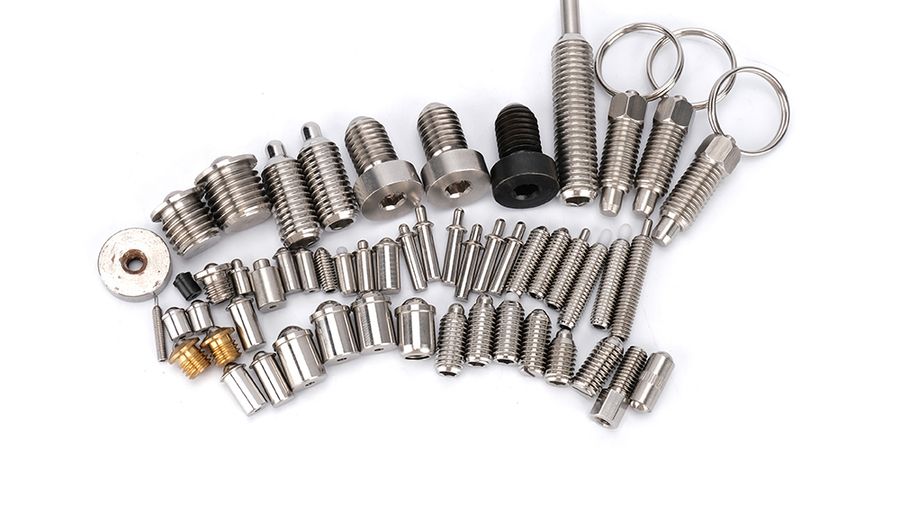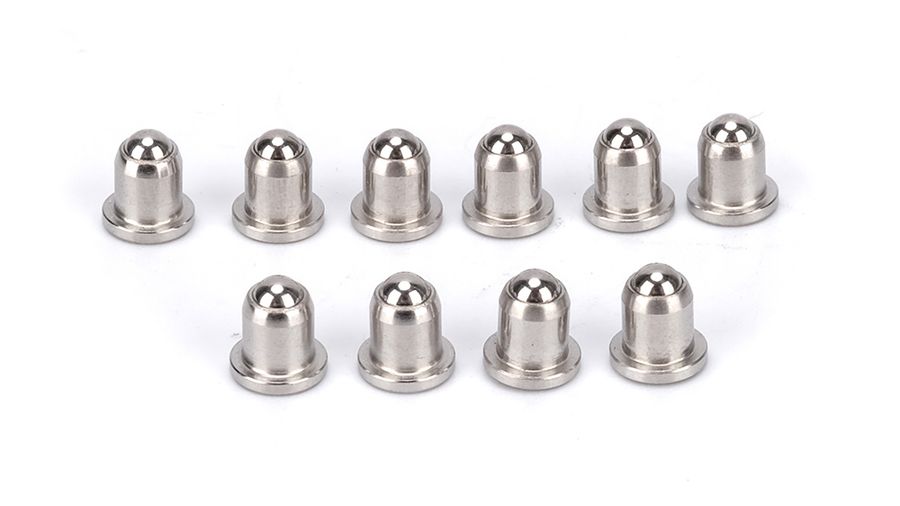
Spring Plunger Selection Guide for Industrial Fixtures
Learn how to select a spring plunger for industrial fixtures by reviewing mounting space, contact style, force requirements and custom design inputs.
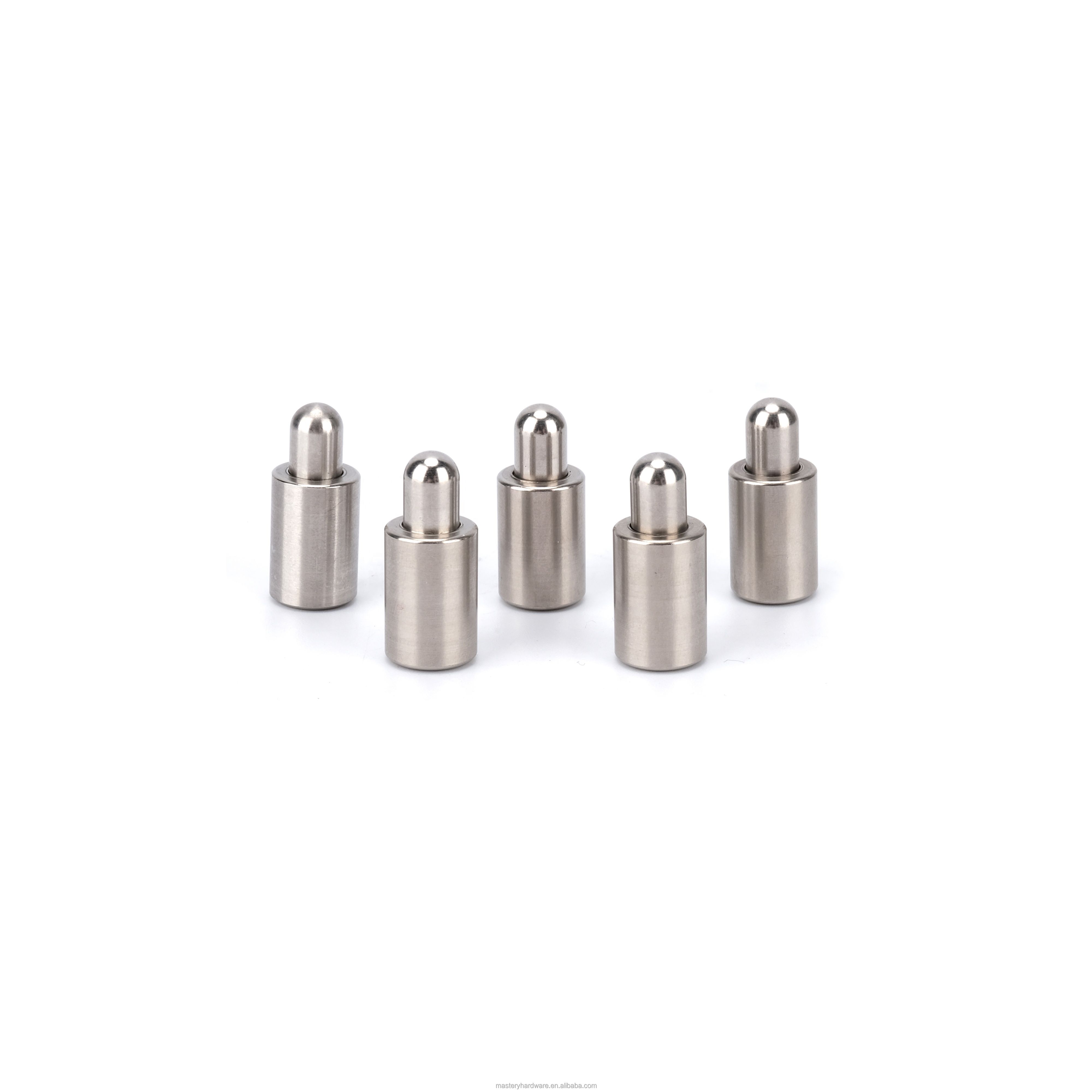
What a spring plunger does in an assembly
A spring plunger applies repeatable contact force through a spring-loaded tip. In industrial fixtures, automation equipment and machine assemblies, it can help hold a workpiece, maintain contact with a mating part or take up tolerance between components. The correct part is not simply the one that fits the hole. It must work with the available installation space, contact surface and motion in the complete assembly.
Start with the function, not the catalogue image
Before choosing a spring plunger, define what the contact point needs to do. Is it holding a component during assembly, pushing a part away after release, dampening a small variation or maintaining light pressure during operation? A clear functional description makes it easier to compare tip shapes, travel and the practical direction of load.
Review the installation envelope
Measure the bore, mounting depth, access for installation and clearance around the moving component. The mating surface should also be reviewed: a flat surface, a groove, a curved part and a moving edge can call for different contact geometry. Sharing a drawing or a simple section view early prevents a nominally compatible part from creating interference in the finished fixture.
Match contact style to the mating part
The tip should be selected around the mating surface and expected movement. A contact point that works well on a flat stationary face may not be suitable for a moving cam, a soft component or an uneven surface. Consider wear, sliding contact, possible side load and whether the plunger needs to locate, retain or simply apply pressure.
Define force and travel as an operating range
Spring force and available travel should be considered together. Ask how much displacement occurs in normal use, how much variation the assembly needs to absorb and what force is acceptable at the start and end of travel. Avoid treating one catalogue number as a complete answer when the mechanism has variable motion or tolerance stack-up.
When a custom spring plunger is the better route
A custom design is often more practical when the required thread, body length, tip shape, mounting arrangement or operating force does not align with a standard configuration. A supplier can review the application more effectively when the enquiry includes a drawing, installation dimensions, mating-part details, expected movement and annual quantity.
A practical checklist before requesting a quote
Provide the installation drawing, required thread or body diameter, usable travel, direction of load, mating-surface description, expected operating environment and any material or finish requirement already specified by your engineering team. This gives the design discussion a reliable starting point without assuming unverified performance values.
Conclusion
A well-selected spring plunger supports consistent fixture operation and a cleaner assembly design. Start with the function and installation envelope, then review contact style, travel and force together. For non-standard mechanisms, a drawing-based review is the fastest way to reach a practical custom configuration.